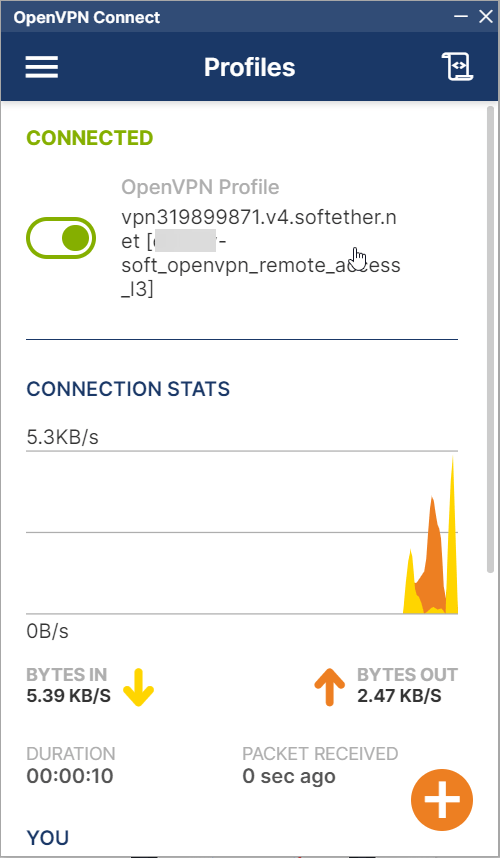
SoftEther VPN is an optimum alternative to OpenVPN and Microsoft’s VPN servers. SoftEther VPN has a clone function of the OpenVPN Server. You can integrate from OpenVPN to SoftEther VPN smoothly. SoftEther VPN is faster than OpenVPN. SoftEther VPN also supports Microsoft SSTP VPN for Windows Vista / 7 / 8. No more need to pay expensive charges for a Windows Server license for the Remote-Access VPN function.

This is a quick deployment and ready-to-run image.
Simple and rapid installation. Easy to maintain.
SoftEther – Free VPN Server on Linux CentOS Stream 9
In case you have NSG’s or Firewall appliances in AWS Marketplace, you’ll have to open access to the following ports: 443, 992, 1194, 5555 TCP and 1194 UDP.
In order to open the ports, go to the Virtual machine’s settings in AWS Marketplace – open Networking and add the necessary ports.
Then you need to open these ports in the Windows firewall.
To do this, go to the “Windows Firewall with Advanced Security” console and create an inbound rule to allow TCP on port (443, 992…).
Software installation
- To start remote server administration on the operator’s computer, you need to install SoftEther VPN Server manager.
- In the “Select Component” drop-down list, select SoftEther VPN Server Manager for Windows.
- In the Select Platform drop-down list, select Windows.
- Download links will display. Select the latest version.
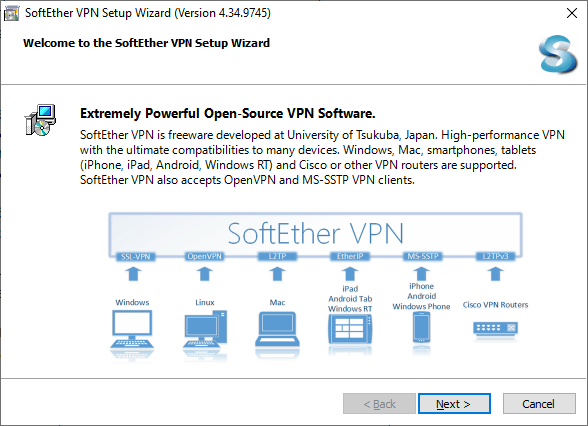
- Download the SoftEther VPN Server installer and run it after completing the download. In the window that opens, click “Next”:
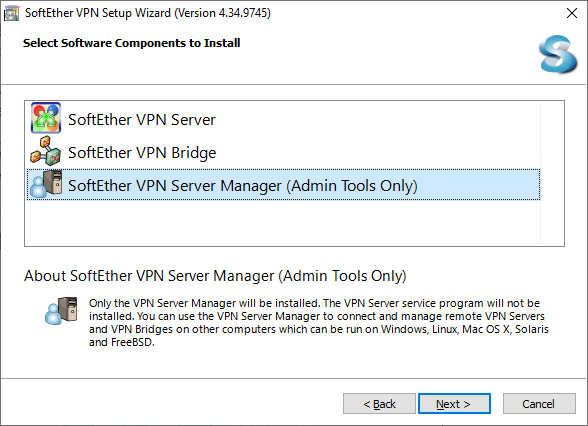
- Select the “SoftEther VPN Server Manager (Admin Tools Only)” and click “Next”:
- After installation, run the program shortcut from the desktop.
Configuring the server
- When opening, the following window will be displayed:
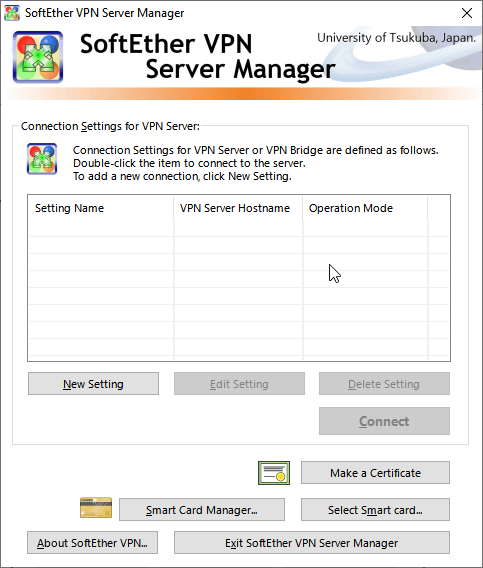
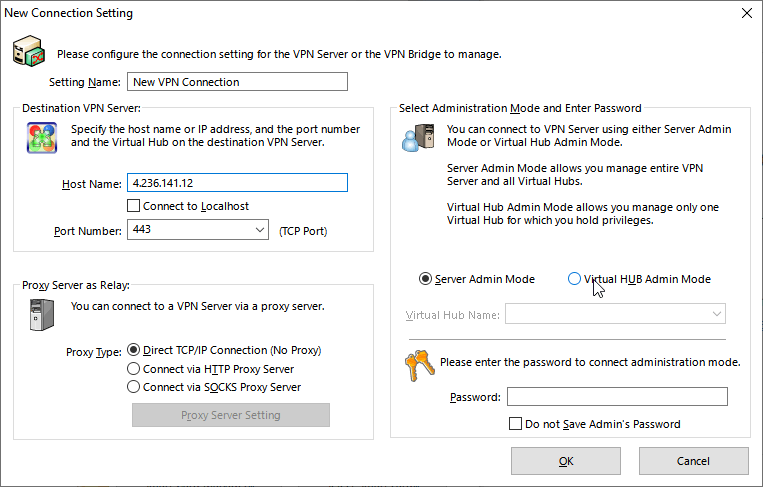
You must create a new connection. To do this, click on the button New Settings.
- Specify the IP address of the Azure virtual machine in the Host Name line. Leave port 443 by default and click OK
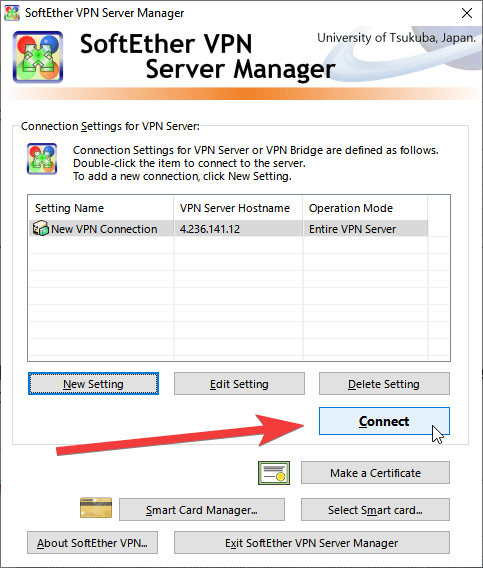
- To start the VPN Server admin panel, click Connect
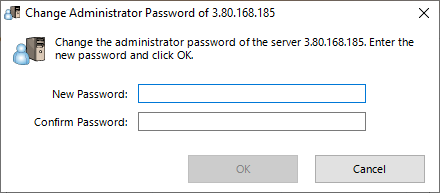
- At the first authorization, you need to set a new administrator password to connect to the server.
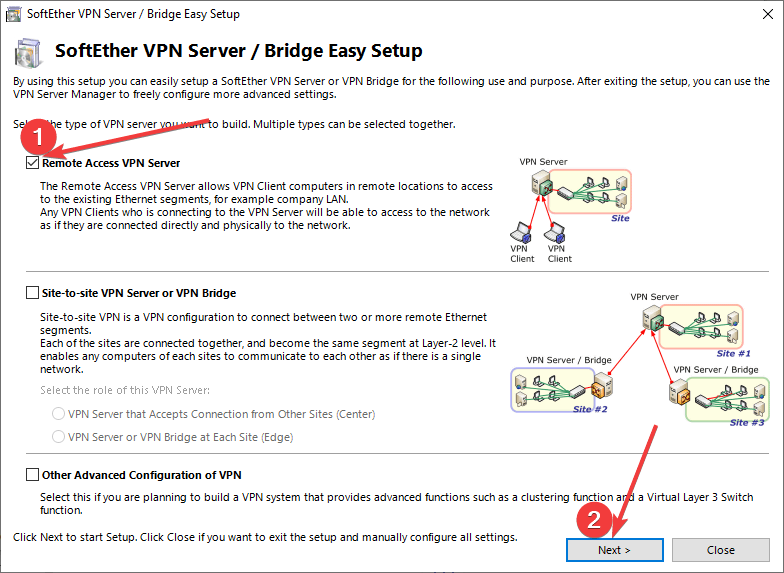
- Next, in the “SoftEther VPN Server / Bridge Easy Setup” window, select the setting Remote Access VPN Server and click Next:
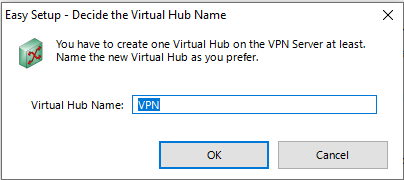
- Next, enter a name for the hub you want and click OK:
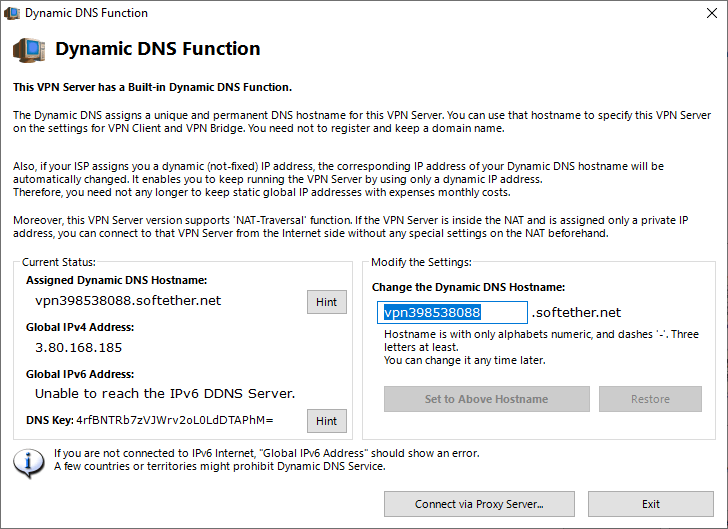
- Click Exit in the “Dynamic DNS Function” window:
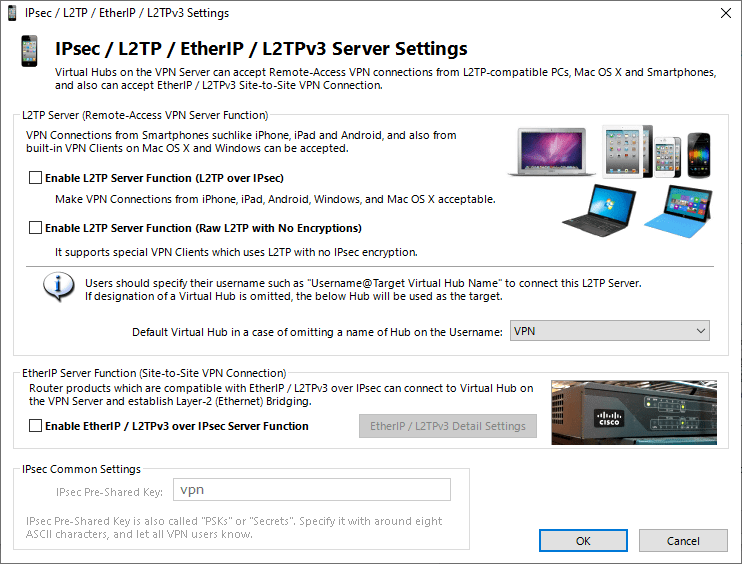
- Click OK in the “IP / L2TP / EtherIP / L2TPv3 Settings” window:
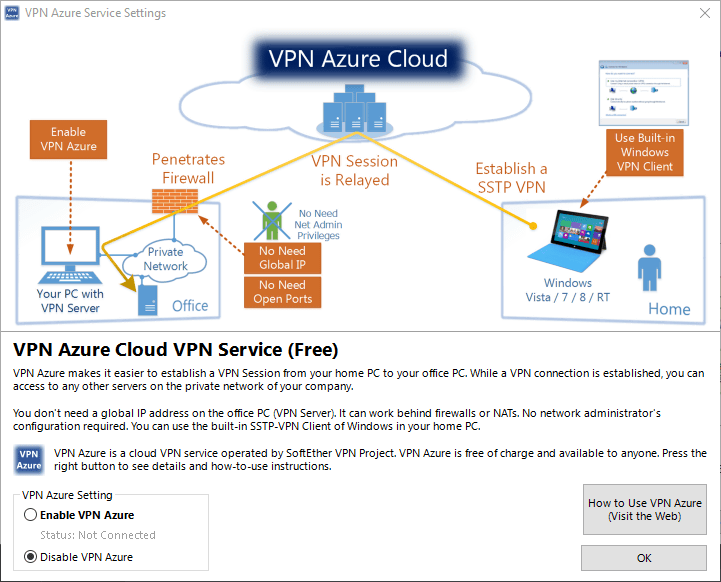
- Next, select Disable VPN Azure and click OK.
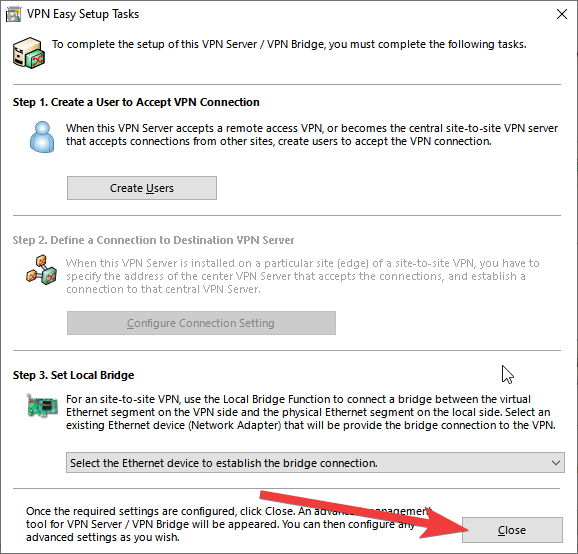
- Next, close the window “VPN Easy Setup Tasks”.
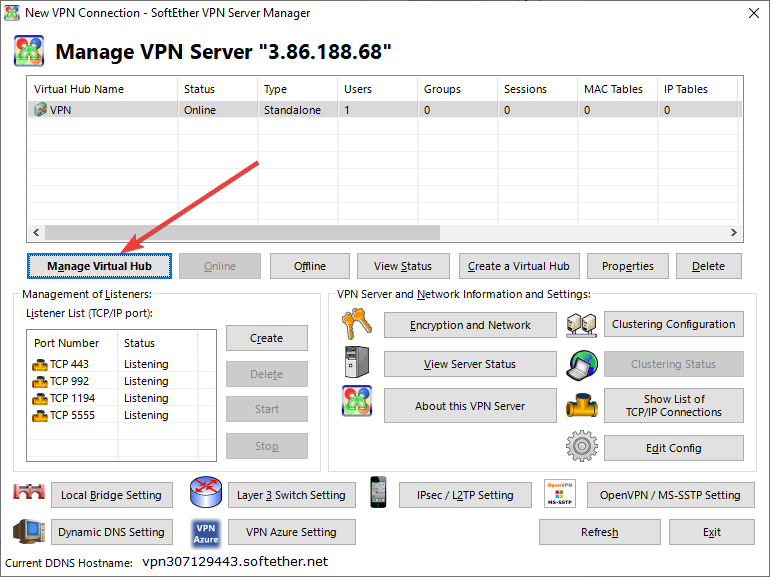
- Also, when creating each hub, you need to enable the Virtual NAT function. For this, you need to click “Manage Virtual Hub”:
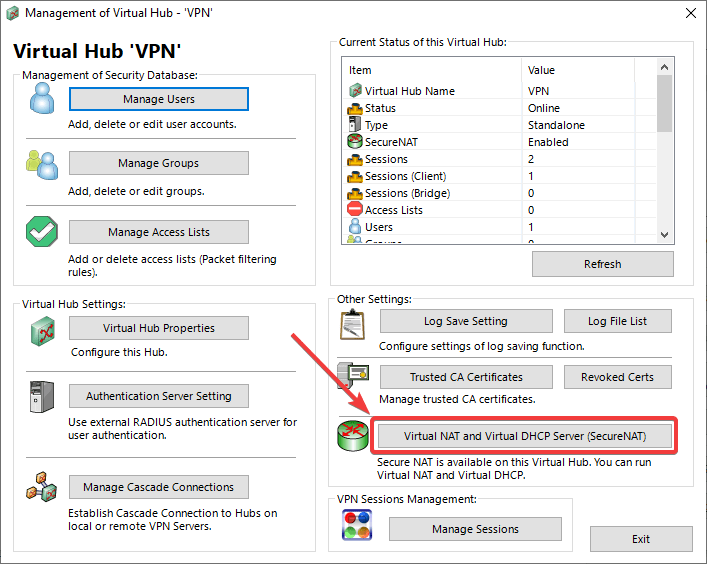
- Open “Virtual NAT and Virtual DHCP Server (SecureNAT)”:
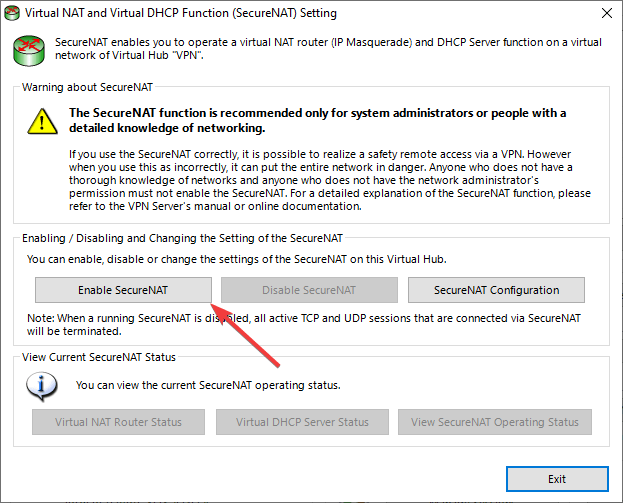
- Click “Enable SecureNAT”:
Adding new users
- To work with VPN, first, you should add a user to the app.
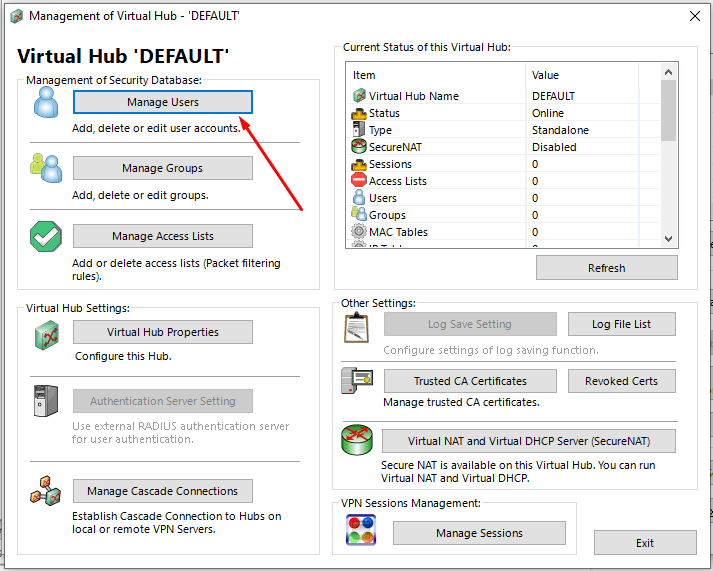
Click on the “Manage Virtual Hub” button:

- Then click on the “Manage Users” button:
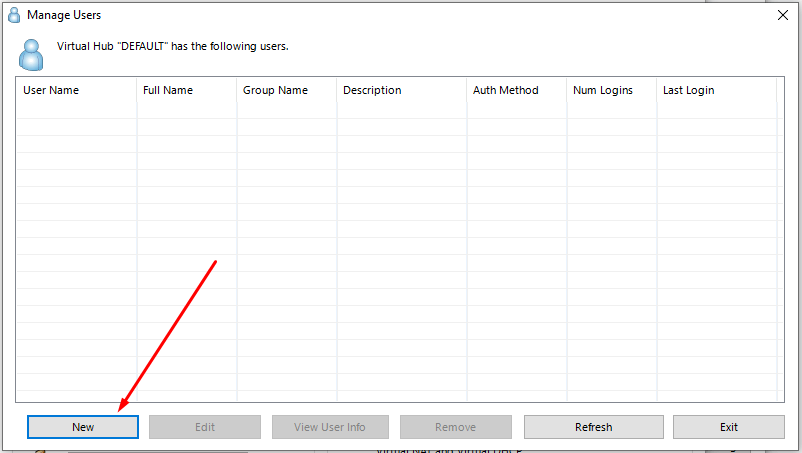
- To create a new user, click “New”.
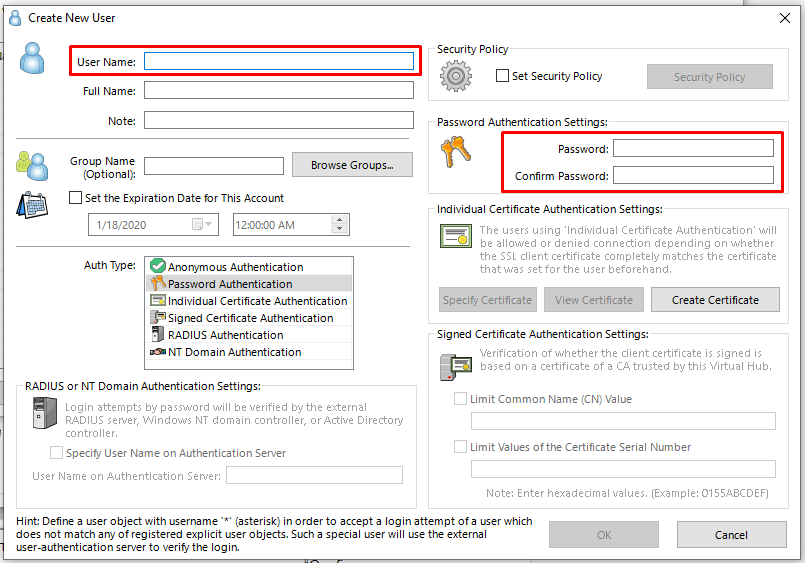
- It’s necessary to insert the name of the user into the “User Name” field, type the password into the “Password” field and verify it by re-entering the password into the “Confirm Password” field. After the data were entered, click “OK”.
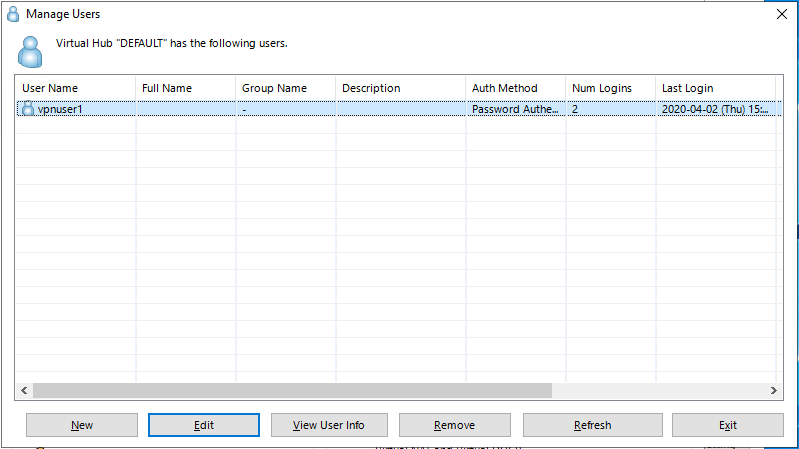
- To change the user’s credentials, select the user and click “Edit”.
Create a configuration file
- To create configuration files, click on the “OpenVPN / MS-SSTP Settings” button.
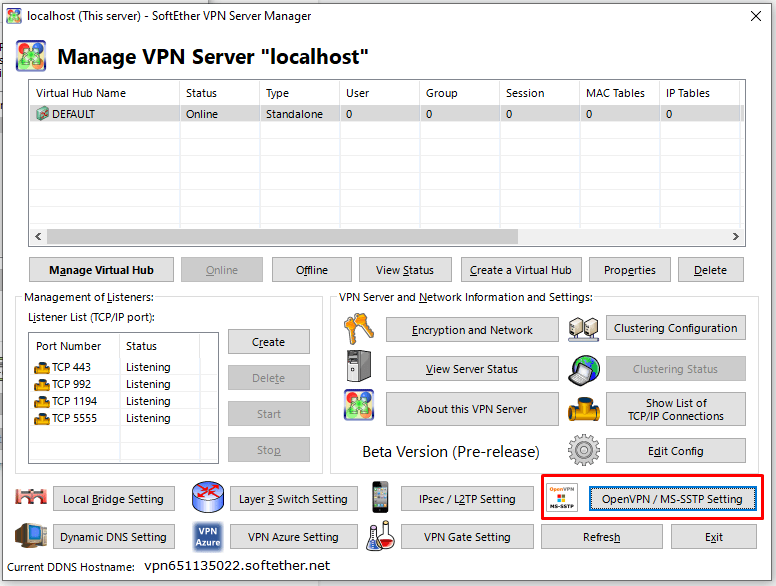
- Click on the “Generate a Sample Configuration File for OpenVPN Clients” button.
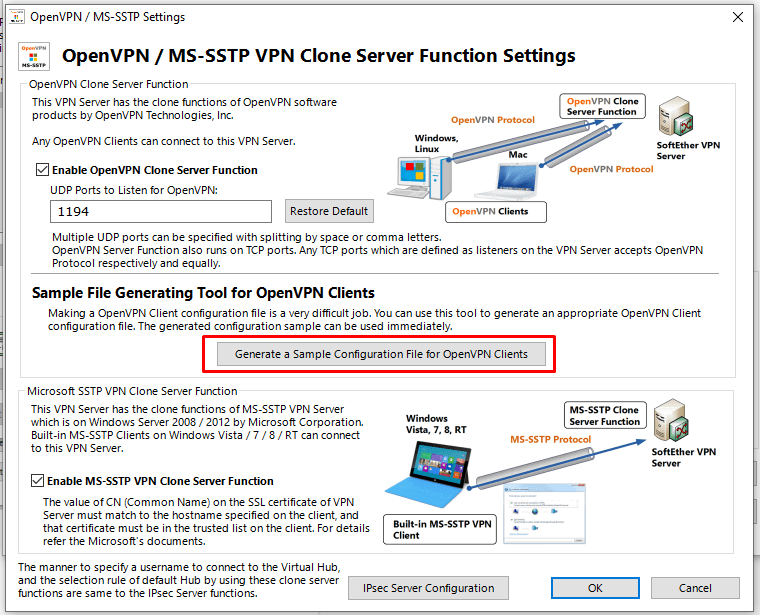
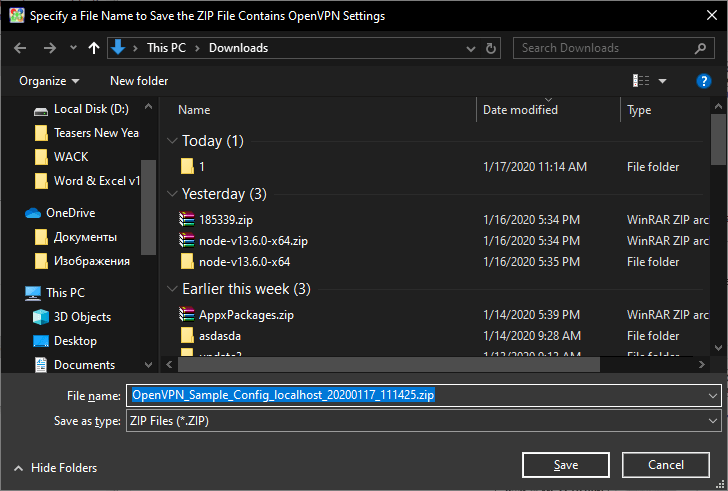
- When the window of the Windows Explorer is opened, select the path to save the archive:
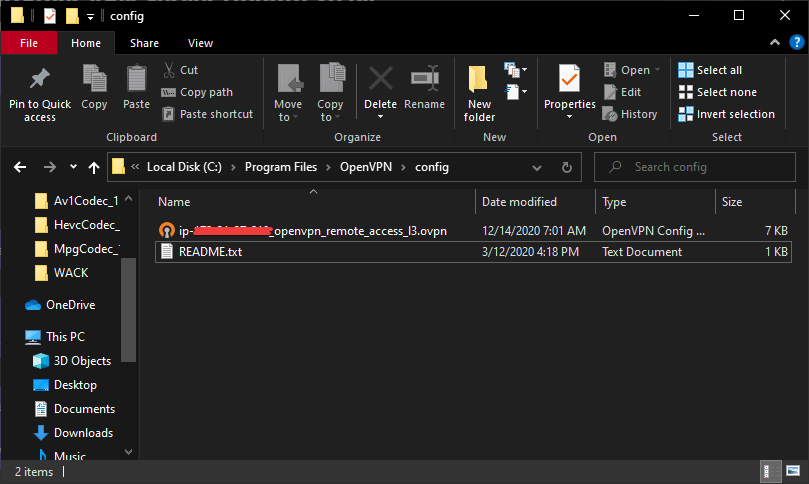
- The following files are in the saved archive:
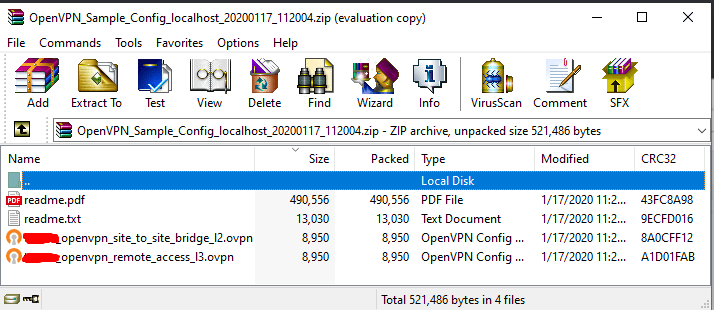
- You should save the file named “…_openvpn_remote_access_l3.ovpn”.
Customize your VPN client
- To customize the VPN Client, you need the OpenVPN Client for the work. Go to the site: Community Downloads | OpenVPN, download and install the OpenVPN client, depending on your OS, Windows:

- Now the OpenVPN is ready to work, and you can run it. After it is started, add your VPN configuration file
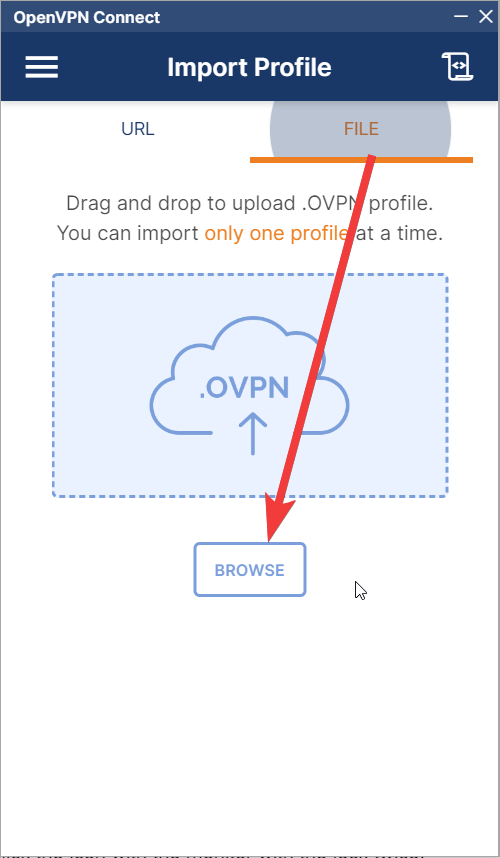
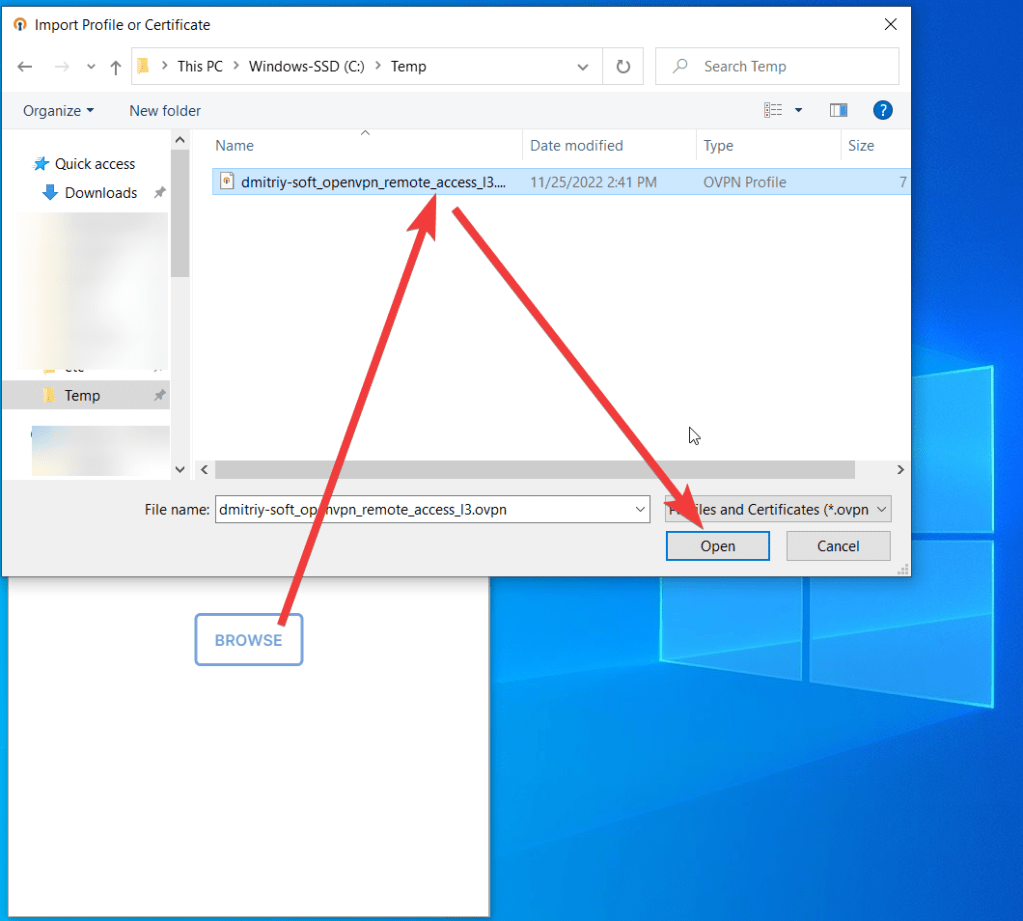
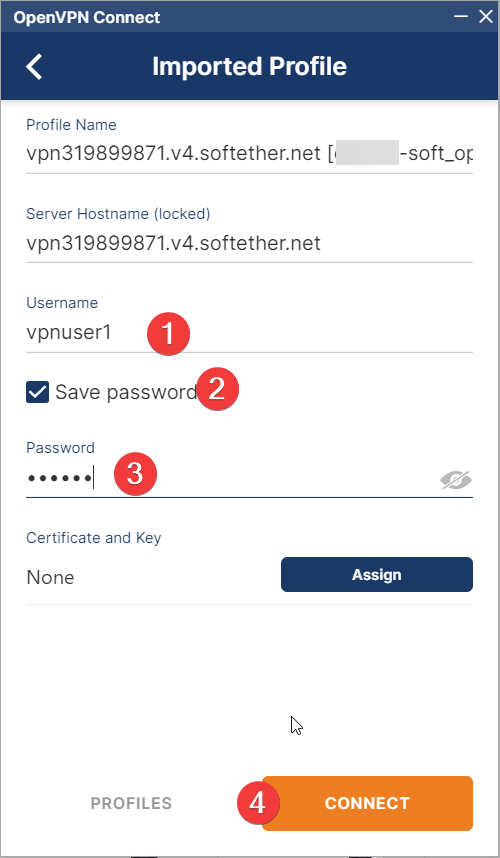
- Then enter “Username” (1), select the checkbox “Save password” (2) for your comfort, enter “Password” (3), and click “Connect” (4)
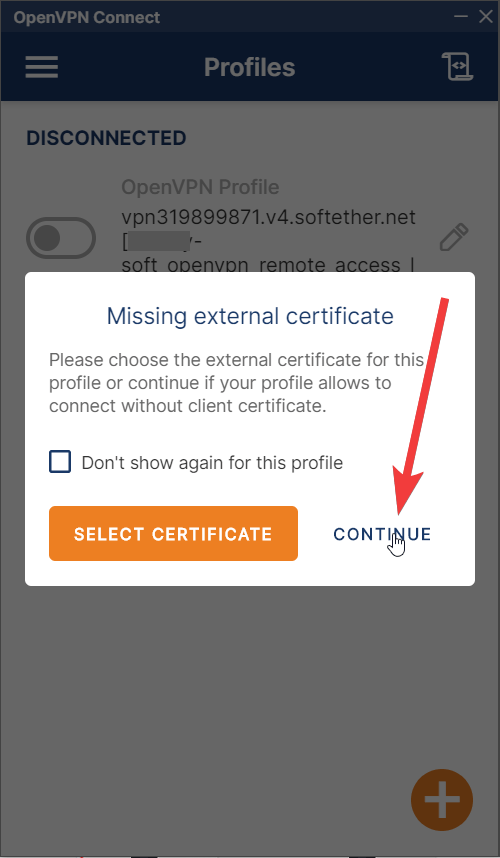
- Click “Continue” to confirm use without a certificate
- Now you can use your Virtual Private Network.